Can AI predict what you will look like after rhinoplasty?
Kun je met AI zien hoe je eruitziet na een neuscorrectie? Dr. Bart legt uit wat AI-simulaties wel en niet kunnen voorspellen en waarom jouw anatomie uiteindelijk bepalend is.
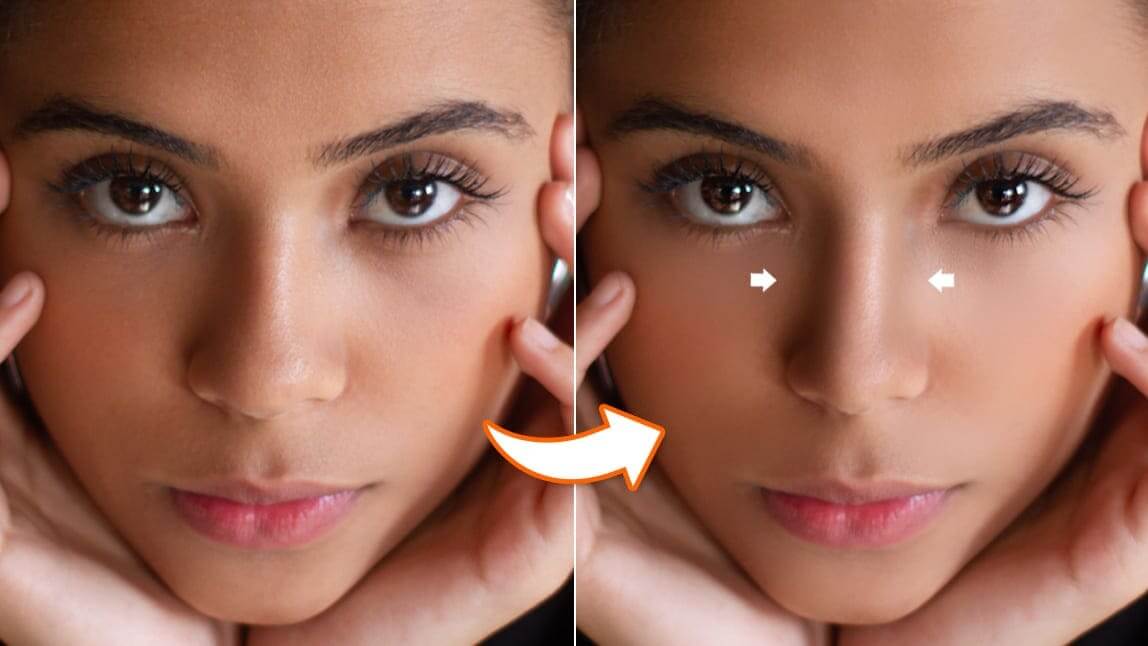
Today, AI can show you within seconds what your face might look like with a smaller nose, a straighter profile or a differently shaped nasal tip. You upload a photograph, describe what you would like to change and almost instantly receive a surprisingly realistic image. Naturally, this sounds ideal if you are considering rhinoplasty. You can already ‘see’ what you might look like after surgery and perhaps even bring that image with you to your consultation. But how reliable is an AI-generated image?
Although artificial intelligence offers interesting possibilities, there is an important difference between a digitally generated nose and a nose that can actually be achieved surgically. AI looks at an image. As a plastic surgeon, I look at anatomy, skin, cartilage, bone structure, function and the face as a whole.
In this article, I explain how AI can be useful when considering rhinoplasty, where its limitations lie and why an AI-generated image should never be considered a prediction of your final result.
AI is changing the way we look at our faces
A few years ago, Instagram and Snapchat filters were the main tools digitally altering our appearance. Today, AI has taken this a significant step further. Generative AI can create images that look remarkably realistic. It can change not only the nose, but also lighting, skin and facial proportions so convincingly that the result can almost look like a genuine photograph.
That makes AI interesting, but also potentially misleading. The more realistic an image looks, the easier it becomes to believe that the result shown in that image must also be surgically achievable. That is not necessarily the case.
What doesn't AI know about your nose?
When you upload a photograph, AI essentially sees only the outside of your nose. A plastic surgeon looks much further. Underneath the skin is a complex anatomy consisting of bone, cartilage and supporting structures. Their shape, strength and quality vary significantly from one person to another.
Skin thickness is also extremely important. In someone with thin skin, small changes to the cartilage may become clearly visible. With thicker skin, the same subtle adjustments may be much less noticeable. AI can simply generate a narrower nasal tip in an image. That does not automatically mean that the same degree of refinement can be achieved surgically.
There is also another essential consideration: your nose is not purely aesthetic. You need to be able to breathe through it properly. A digitally generated image does not have to take nasal function into account. As a surgeon, I always do.
A photograph is two-dimensional, but your nose is three-dimensional
This is another important difference. A nose does not consist of a single profile. During a consultation, I assess the nose from the front, the side, oblique angles and from below. A change that looks beautiful from the side may have a completely different effect when viewed from the front.
Imagine that AI removes a dorsal hump from the profile while also making the nasal bridge extremely narrow. It may look attractive in that particular image, but in reality, the result also needs to work from every other angle. Rhinoplasty is a three-dimensional operation.
Every change can influence another part of the nose. Adjusting the nasal tip, for example, can alter the relationship between the nose and the upper lip. Changing the height of the nasal bridge can affect how wide the nose appears from the front. That interaction cannot be properly assessed based on a single AI-generated image.
Does that mean AI isn't useful at all?
Not at all. I actually think AI, filters and reference photographs can be very useful when they are used as communication tools. Sometimes a patient finds it difficult to explain exactly what bothers them about their nose. An image can quickly make their preferences much clearer.
Perhaps someone does not actually want a smaller nasal tip, but simply wants it to droop less. Or an example image may reveal that a patient prefers a straight bridge rather than a slightly curved profile. That type of information can be very helpful during a consultation. An AI-generated image can therefore be an excellent starting point for a conversation. It simply should not become the endpoint.
“I want exactly this nose”
This is where difficulties can arise. When someone has spent a lot of time creating a digital version of themselves, they may become strongly attached to that exact image. But an AI program does not need to consider what is anatomically possible. It can digitally remove bone without considering structural stability. It can make the nasal tip extremely narrow without taking skin thickness into account. And it can make the nose very small without considering whether the patient will still be able to breathe properly. Surgery works differently.
Every change I make must not only look good during surgery, but also remain stable throughout the healing process and allow the nose to function properly for many years to come. That is why I would never promise to reproduce an AI-generated image exactly.
AI may unintentionally create a new beauty ideal
There is another interesting aspect to consider. AI models are trained on enormous amounts of existing visual material. As a result, certain features may repeatedly appear in AI-generated faces: a narrow nose, smooth skin, strong symmetry and particular facial proportions.
The risk is that we become increasingly exposed to similar digitally optimised faces and gradually start to perceive them as normal or ideal. I think this is an important development to be aware of within aesthetic surgery. Because my approach is actually the opposite. Not everyone needs the same nose. A nose should suit the individual, their anatomy and the character of their face.
Why is a simulation during a consultation different?
Photographs and simulations can also be used during a consultation to discuss potential changes. The important difference is that I have already examined the patient and assessed their anatomy before considering what might be achievable. I know, for example, how thick the skin is, what the cartilage is like, how the nose functions and which changes I consider surgically appropriate.
A simulation can then help visualise a possible direction. However, I always explain that such a simulation is an indication, not a guarantee. No surgeon can predict exactly how every millimetre of the nose will heal after surgery. The human body remains a biological factor, and every patient heals differently. A simulation is therefore a tool for aligning expectations, never a promise of an exact final result.
My philosophy as a plastic surgeon
"I have absolutely no problem with patients bringing an AI-generated image, a filter or an edited photograph to their consultation. In fact, sometimes one image tells me more quickly what someone likes than a ten-minute conversation.
But that is where the real work begins for me. I assess the anatomy and determine which elements of that image actually suit the patient and which changes are technically achievable.
A computer can create any nose you want within seconds. My responsibility as a surgeon is different. I need to create a nose that looks good, functions properly, heals naturally and remains stable in the long term.
That is why I am happy to use a digital image as inspiration, but never as a promise."
Can you use AI before coming to a consultation?
Yes. If you are curious, there is nothing wrong with experimenting with digital images. It may even help you think more carefully about exactly what you would like to change. However, try not to view the image as a prediction of your surgical result.
Instead, ask yourself what you like about the change. Is it the straighter nasal bridge? A slightly lifted tip? Less projection? Or simply the fact that the nose attracts less attention within the face?
Those are much more useful observations to bring to a consultation than asking whether we can reproduce an AI-generated image exactly.
Before-and-after photographs remain important
If you want to understand what a plastic surgeon can realistically achieve, I still consider genuine before-and-after photographs far more valuable than AI-generated images. These photographs show real patients, with real anatomy and a real healing process.
At Dr Bart Clinic, we photograph our patients under consistent conditions, using the same lighting and fixed angles. This allows us to compare results as honestly and accurately as possible. I am also very grateful to the many patients who give us permission to share their results. For someone considering rhinoplasty, these photographs provide a much more realistic impression of what surgery can achieve than a digitally generated nose ever could.
Will AI play a bigger role in rhinoplasty in the future?
Probably. AI is developing incredibly quickly, and research is exploring its potential applications in analysis, simulation and surgical planning. It is entirely possible that this technology will become increasingly useful for analysing facial proportions or visualising different treatment options.
However, I do not expect technology to replace the personal assessment of an experienced plastic surgeon. Rhinoplasty is about much more than measurements. It involves anatomy, function, facial proportions, healing, expectations and, ultimately, aesthetic judgement. Technology can support that process. The final decision remains a human one.
Conclusion
AI can show you within seconds what you might look like with a different nose. But that is very different from predicting what you will look like after rhinoplasty. An AI-generated image does not know your skin thickness, cartilage, bone structure or nasal function, nor can it predict exactly how your body will heal after surgery.
Use AI primarily as inspiration. It can be an interesting way to discover which changes appeal to you and may help you communicate your preferences during a consultation. But a successful rhinoplasty does not begin with an algorithm. It begins with understanding your face, your anatomy and your wishes, followed by an honest conversation about what can realistically be achieved.
Curious about what is possible in your situation?
During a personal consultation, we look not only at how you would like your nose to look, but above all at what suits your face and anatomy.
You are welcome to bring reference photographs, filters or AI-generated images with you. They can be useful tools for communicating your preferences. We can then discuss which changes are actually achievable and what kind of result would be realistic in your individual situation. A successful rhinoplasty always begins with honest advice.
Schedule a personal consultation at Dr Bart Clinic and discover what is possible for you.